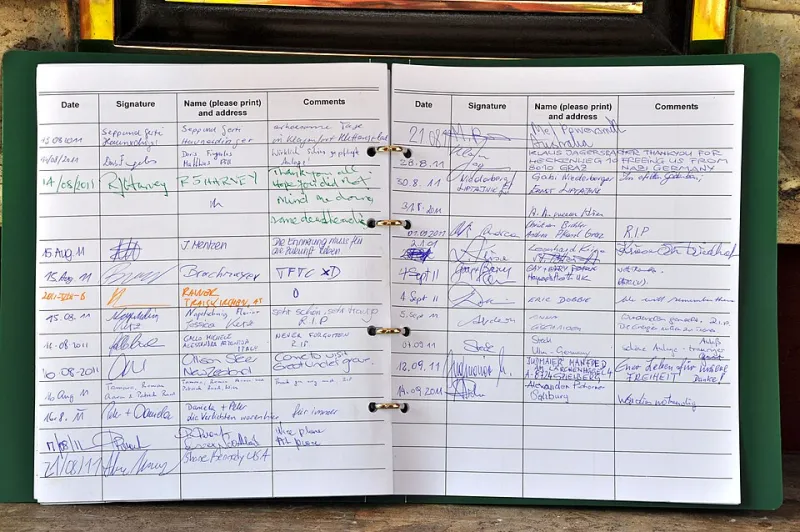
The Confession Booth at the Bottom of the Site

There is a page on this site now that I quietly hoped nobody would find, and then got mildly annoyed when nobody found it. It lives at /errata. It lists my mistakes in public: the typos I missed, the links I broke, the firm opinions I have since quietly climbed down from. It is, depending on your mood, either a small act of integrity or a very British form of self-flagellation with a cup of tea in hand.
I built it on a Tuesday evening, which is when most of my better decisions happen, usually between the second cup and the bit where I should be doing something else. I expected to feel embarrassed. What I actually felt was something closer to relief.
What an errata page is (and isn't)
An errata page isn't a changelog. A changelog is for things that were always going to change — new posts, new projects, a redesign of the header that I will probably undo in March. Errata is for the things that were wrong.
It's also not an apology page. There's a particular tone I wanted to avoid, the one where a writer falls over themselves so dramatically that the correction becomes more performance than fact. Nobody needs a three-paragraph preamble before "I spelled 'definitely' wrong". The entry should be shorter than the mistake is embarrassing. That's the rule I've settled on.
The first entry was a typo I'd already defended out loud
My inaugural confession was a spelling error in a subheading that had been live for roughly four months. I know it was four months because a friend mentioned it in a group chat, and I — in a moment of pure ego — replied that it was a stylistic choice.
Reader, it was not a stylistic choice. It was a typo. I fixed it the same evening and wrote the first errata line: "Heading in the 'Rain, Routers' post corrected — was a misspelling, not a stylistic decision, despite what I said in a WhatsApp group."
Putting that in writing did something odd. It removed the small, nagging awareness that someone out there had clocked it and said nothing. That's the thing about typos on a personal site: you never know if the silence is because nobody noticed or because everyone is simply too polite to mention it. The errata page answers the question on your behalf.
Retiring a take is the awkward bit
Correcting a spelling is easy. Correcting an opinion is where the errata page earns its keep.
Earlier this year I wrote, with more confidence than evidence, that a certain café did the finest bacon roll in the West Country. I have since been to Cardiff. I have since been humbled. The original post still says what it says, because rewriting history is worse than being wrong in public, but the errata line now reads: "Bacon roll claim narrowed to 'a very good one' after further research in South Wales."
There's a version of me from two years ago who would have deleted the whole post rather than admit that. Deleting feels tidy. It's also faintly dishonest — anyone who shared the link now finds a dead end, and anyone who remembers reading it assumes they imagined the whole thing. A struck-through sentence is kinder than a broken URL.
Broken links are just wonky gates
Most of the errata page is, if I'm honest, link maintenance. The web is a street where the shops keep changing hands, and a personal site that links out to things is basically a row of gates that slowly go wonky.
I had a link to a small tool I used for a year and loved. The tool died. The link stayed up, pointing at a domain that now redirects to something selling domain names. A reader emailed — kindly, in the way only British readers email — to say the link was "perhaps a touch out of date". I added it to the list and replaced the link, and the whole exchange was warmer than it had any right to be.
That's the practical case for an errata page: it turns a small frustration into a small conversation, and it turns a site that quietly rots into one that is visibly maintained.
Why honesty beats a polished About page
The About page is where I tell you who I am. The errata page is where I show you. One is a pitch; the other is evidence.
Trust on a personal site isn't built by sounding clever. It's built by being the sort of person who, when they get something wrong, says so in a place you can find it without having to ask. It's the difference between a shop that claims to check its stock and one that has a little clipboard by the till.
How to start one without it becoming a second job
A few things that worked for me, in case you fancy one of your own:
- Keep it on one page. No categories, no filters, no CMS fields. A list, newest first, with dates.
- Write the entry at the moment you fix the thing. Not later. Later never arrives; later is where good intentions go to be rained on.
- Say what changed, not how you feel about it. "Link replaced" beats three sentences of remorse.
- Link back to the post. The correction should be a footnote to the original, not a separate confession floating in the void.
- Leave the old claim in the post, with a note. Quietly editing history is the one thing that undermines the whole idea.
I've had one reader tell me the errata page is "the most honest thing on the internet this week", which is generous, and one tell me it was "a bit much", which is fair. Both are welcome. It's a personal site; it's allowed to be a bit much.
The small shelf of being wrong
The site already has a shelf for unfinished projects. The errata page is the shelf next to it, the one for things I finished and got slightly wrong. Between the two, there's a fairly complete picture of how this place actually gets made: slowly, by hand, with the occasional spelling disaster and a bacon roll opinion that didn't survive contact with Wales.
If you run a site of your own, I'd gently suggest one. Not because you owe anyone an apology. Because a public list of your own corrections is a strange, quiet sort of freedom — and, if I'm honest, the easiest page I've written all year.